Why Does Concrete Crack Even When Everything Seems Right?
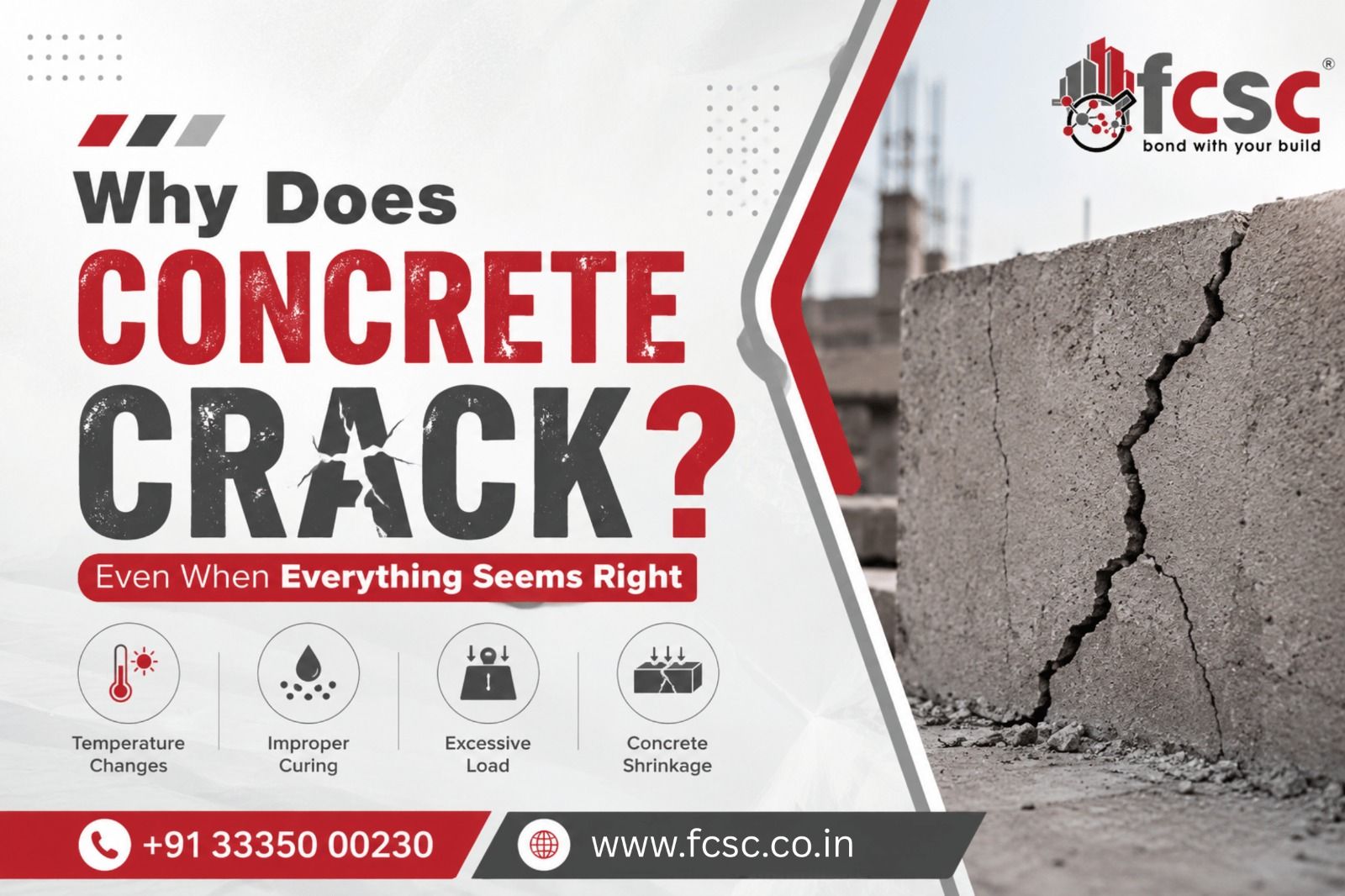
Concrete is well known for its strength and durability; however, cracks may develop even when the mix is flawless, workmanship is flawless, and the curing process is adequate. Some cracks may not pose a problem, while others will let water, chlorides, and chemicals penetrate into the structure, eventually weakening it.
Luckily, concrete cracks are caused by specific factors and can therefore be prevented or repaired using high-quality construction chemicals. Modern innovations like superplasticizers, waterproofing admixtures, repair mortars, grouts, and protective coatings significantly increase the performance of concrete.
Can Every Concrete Crack Be Considered a Problem?
Cracks do not always signify an issue in construction. For example, Some minor hairline cracks may not pose an immediate serious concern. However, non-hairline cracks or repetitive cracks could indicate that something went wrong during the mixing.
The main thing is to comprehend the reason for crack formation before applying the proper approach to eliminate it.
Why Concrete Cracks Even When Everything Seems Done Right
1. Excess Water in the Mix
The use of excess water at the job site is one of the most widespread causes of cracking. While it makes the concrete easier to work with, it results in a higher water-cement ratio. Consequently, there remain more pores as water evaporates. As a result of the above-described process, some issues emerge:
- Plastic shrinkage cracks occur
- Compressive strength decreases
- Permeability increases
- Deterioration occurs faster
To avoid any issues, it is possible to use highly efficient superplasticizers. They provide necessary workability without too much water.
2. Improper Curing
Concrete continues to gain strength after it has been placed. When moisture escapes too rapidly because of either heat, wind, or improper curing, the surface of a concrete structure will shrink at a higher rate than its interior. Some of the common issues that may arise include:
- Cracks on the surface
- Dust formation
- Lower durability of concrete
A good curing compound helps retain moisture, which is essential for proper concrete hardening.
3. Drying Shrinkage
Even the best-designed concrete can shrink over time due to the evaporation of moisture from the concrete. When concrete is limited in movement, which may happen because of being restricted in any way by steel reinforcement or walls of the building, tension stresses form and cracks appear. This phenomenon is most likely to happen in:
- Large concrete slabs
- Residential houses
- Industrial flooring
The right selection of the concrete mix design significantly lowers risk of concrete shrinkage occurrence.
4. Changes in Temperature
Concrete is heated up and thereby expanded and cooled down and thereby contracted. Every day and every season weather changes move the concrete inside. Without properly designed joints or other measures to control thermal stresses, these movements can lead to cracking.
5. Cracking Due to Settlement
Sometimes the problem is not in concrete but in properties of the ground. Uneven ground settlement, movement of foundations and excessive loading are factors which create concrete cracks getting larger. Such situations should be investigated and the appropriate repair solutions chosen.
Why Small Cracks Become Bigger Problems
Many people think that there is no problem with hairline cracks. In spite of the fact that they are very small they allow moisture and thermal agents to come into concrete. As a result:
- Reinforcement is destroyed
- Structural properties decrease
- The walls become wet
- Water leaks happen
It is necessary to prevent water penetration and there exist waterproofing materials that help to achieve this.
Construction Chemicals that Prevent Cracking
Modern construction chemicals are used not only to repair damage but also to improve the performance and durability of concrete.
Concrete Admixtures
The advanced types of these admixtures enhance the workability of the mixture while keeping the water-cement ratio down. Some of the benefits include the following:
- Increased strength
- Decreased shrinkage
- Higher durability
- Easier placement
FCSC's advanced PCE-based superplasticizers improve workability while maintaining a lower water-cement ratio, making them suitable for ready-mix concrete, infrastructure projects, and high-performance construction applications.
Waterproofing Solutions
The waterproofing materials perform their functions from within the concrete to decrease its water absorption capacity and permeability. Some of the key advantages are the following:
- Reduced water penetration
- Increased compressive strength
- Protection against corrosion of steel reinforcement
- Increased lifetime of the structure
They are mainly applied in the constructions of foundations and basements, as well as in roof slabs and various water-retaining structures.
Crack Repair and Restoration Solutions
When cracks are already present, repair methods aim to restore the integrity of structures. Techniques include:
- Repair mortars
- Structural repair products
- Protective coatings
- Crack repair products
The proper repair method will be determined by the size of the crack, its depth, and cause.
Grouting and Anchoring Products
Grouting products fill voids, stabilize structures, and aid in transferring loads where movement or gaps have occurred. These products are particularly beneficial for:
- Machinery foundations
- Structural anchoring
- Precision installations
- Repair applications
The Proven Methods for Reducing the Risk of Concrete Cracking
Even though cracks cannot be prevented completely, one can absolutely minimise the risk of their appearance by applying these proven recommendations.
- Ensure appropriate water-cement ratio
- Use excellent admixtures
- Ensure correct concrete curing
- Do not forget about expansion joints
- Be careful with concrete placement in extreme weather
- Deal with minor cracks before they turn into serious ones
The proper use of quality construction methods and special chemicals leads to secure and durable structures.
Create Concrete That is Built to Last
Concrete cracking can result from a combination of different factors occurring over time. Crack formation may occur due to the loss of moisture, humidity, temperature fluctuations, too much moisture in the mixture, concrete shrinkage, or environmental impact.
The best prevention begins long before the concrete is poured in place. Different additives facilitate the blending process and increase the strength of concrete, waterproofing materials help decrease permeability, curing compounds assure proper hydration of concrete, and repairing solutions allow one to restore the damaged concrete if needed. All these solutions create long-lasting concrete constructions.
Choosing high-quality construction chemicals from reliable manufacturers like FCSC enables engineers, builders and contractors to prevent cracks more effectively.